LightBlog

lundi 13 décembre 2021

These are the Best USB-C Hubs for MacBook Pro in 2021

Buying a MacBook doesn’t mean just spending on the laptop itself. All MacBook Pro models from 2016 only come with USB-C ports, which has thankfully changed with the new 14-inch and-16 inch MacBook Pro. If you have an existing MacBook though, you’ll have to purchase additional dongles and USB-C hubs to plug in some of your devices. So we’re going to help you find some of the best USB-C hubs you can buy for your shiny new MacBook Pro. While you’re at it, you might also want to get a good protective case for your MacBook Pro since Apple repairs are rather expensive if you end up damaging your Mac.

If you’ve recently purchased a MacBook Pro and are new to macOS, you might also be interested in some software tips that can be useful while using the Mac regularly, like the different ways in which you can force quit apps on Mac if they’re unresponsive or even the proper way to uninstall apps on your Mac without leaving any residue behind.

    Belkin USB-C Hub for MacBook Pro

    Reliable and functional

    Belkin is one of the most well-known brands in terms of accessories and this USB-C hub from them offers all the basic ports you would need - 2 USB-A ports, a USB-C port, an SD card reader, an HDMI port, and a LAN port as well.
    NOV8Tech 7-in-1 USB-C Hub

    Good for basic use

    This USB-C hub offers a selection of 7 different ports - 2 USB-C, 2 USB-A, an HDMI port, an SD card reader and even a microSD card reader. It's affordable and will get the job done for most users.
    MOKiN USB-C Dongle for MacBook Pro

    All the basics covered

    The MOKiN USB-C hub is a great option for those getting their first dongle for the MacBook Pro. It takes up one USB-C port and provides 2 USB-A ports and an HDMI port along with a full-size SD card and microSD card slots.
    Dockteck 7-in-1 USB-C Dongle

    For 1Gbps ethernet

    This 7-in-1 dongle comes with all the usual ports and also has a 1 Gbps ethernet port. If you want fast, reliable internet connectivity through a LAN cable, this is the dongle you need.
    Satechi 9-in-1 Multiport Adaptor

    For power users and travellers

    This USB-C hub comes with a detachable cable so it's easier to carry while traveling. It also offers a VGA port and a Gigabit Ethernet port along with the usual USB-A, USB-C, and HDMI ports and SD card slots.
    Baseus USB-C Docking Station

    Best for triple monitor setups

    The Baseus docking station is the only USB-C hub you need for almost every use-case. It has 3 HDMI ports for a triple monitor setup along with 3 USB-A ports, 4 USB-C ports, an ethernet port, a headphone jack, and SD card slots. One of the best hubs you can get.
    9-in-1 USB-C Hub for MacBook

    Additional USB port

    This USB-C adaptor is slightly unique in the sense that it offers an additional USB-A port compared to some of the other options. It also has an HDMI port, SD card slots, and an Ethernet port. This is a good option if you have a lot of USB accessories to plug in.
    Ikling 9-in-1 Hub for dual displays

    Another one for power users

    The Ikling USB-C Hub is for those who want to attach two displays to their MacBook, one via HDMI and the other via VGA. This one also has an additional audio jack accompanied by 2 USB-A ports, a USB-C and Ethernet ports, and SD card readers.
    Anker 7-in-1 Thunderbolt 3 Hub

    Functional and long-lasting

    Anker is a popular accessories brand and if you get this particular dongle, you can be assured it will last you a long time. You get all the basic connectivity like 2 USB-C ports, 2 USB-A ports, an HDMI port, along with SD card readers.

These were some of the best USB-C Hubs for MacBook Pro and guess what, they work with any MacBook Pro from 2016 onwards that have USB-C ports including the new M1 MacBook Pro. All the dongles are Thunderbolt 3 compatible so they even work with a MacBook Air and even some Windows laptops. The Baseus Docking Hub is one of the most versatile USB-C hubs that we would recommend if you work from a desk all the time. If you’re constantly on the move, the Satechi 9-in-1 Hub should be your default option.

No matter which USB-C Hub you get, make sure you handle it with care as these accessories are more often than not quite fragile. Also, keep in mind that the new M1 MacBook Pro doesn’t support multiple displays via the USB-C port so you’ll only be able to attach one display even if your USB-C hub has multiple HDMI/VGA ports.

The post These are the Best USB-C Hubs for MacBook Pro in 2021 appeared first on xda-developers.


from xda-developers https://ift.tt/3w9ZAea
via IFTTT

dimanche 12 décembre 2021

Xiaomi’s new battery tech offers 10% more capacity at the same volume

Although we’ve seen some significant advancements in fast charging tech over the last few years, smartphone batteries have remained largely unchanged. However, Xiaomi finally seems to have a better solution. In a recent post on Weibo, the company announced its upcoming High-Silicon Lithium battery technology, promising increased capacity at the same volume.

Xiaomi claims that its new High-Silicon battery technology features three times the silicon content on the negative electrodes as existing lithium-ion batteries and a new packing technology that shrinks the control circuits. As a result, the company is able to pack 10 percent more capacity in the same amount of volume. As you can see in the attached image, Xiaomi’s new battery pack is a bit smaller than a conventional lithium-ion battery, even though they offer the same capacity.

Xiaomi's new High-Silicon lithium battery next to conventional lithium ion battery

L: Conventional lithium-ion battery; R: Xiaomi’s high-silicon lithium battery

While a 10 percent increase might not sound like a whole lot, it could make a significant difference. The higher capacity batteries will give OEMs the flexibility to either offer a higher capacity battery on their devices without the need to make more room for the battery pack or they could use the extra room left by using a smaller battery to pack more/better hardware on their devices. Along with the increased capacity, Xiaomi claims that its new high-silicon lithium batteries can increase the battery life by 100 minutes.

Xiaomi says it will begin mass-producing the new batteries in the second half of next year, so we don’t expect to see them on phones until much later. The upcoming Xiaomi 12 series will, most likely, not feature the new batteries, but we can expect to see them in next year’s Xiaomi flagship lineup.

Are you excited about Xiaomi’s new battery tech? Do you think the 10 percent improvement will make a significant difference or not? Share your thoughts in the comments section below.

The post Xiaomi’s new battery tech offers 10% more capacity at the same volume appeared first on xda-developers.


from xda-developers https://ift.tt/3DNhx5p
via IFTTT

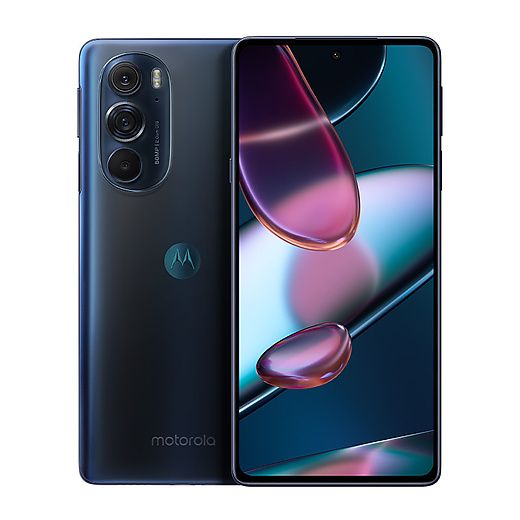
Do you think the Moto Edge X30 has what it takes to put Motorola back on the map?

Motorola lifted the covers off the all-new Moto Edge X30 in China earlier this week. Not only is it the first phone to launch with Qualcomm’s latest flagship Snapdragon 8 Gen 1 SoC, but it’s also the first non-Google phone to launch with Android 12 out of the box. However, these aren’t the only things that make the Moto Edge X30 special. The phone has much more to offer in terms of premium hardware, but the best part is that its top-end variant costs around $650 only.

Moto Edge X30: Specifications

Specification Moto Edge X30
Display
  • 6.7-inch FHD+ OLED display
  • 144Hz refresh rate
  • 576Hz touch sampling rate
  • HDR10+
  • 10bit color
  • DCI-P3 coverage
  • 1024nits peak brightness
SoC
  • Qualcomm Snapdragon 8 Gen 1
RAM & Storage
  • 8GB LPDDR4 + 128GB UFS 3.1
  • 8GB + 256GB
  • 12GB + 256GB
Battery & Charging
  • 5,000mAh
  • 68W fast charging support
Security
Rear Camera(s)
  • Primary: 50MP, 1/1.55″, PDAF, OIS
  • Ultra-wide: 50MP, 1/2.76″, AF, 117° FoV
  • Tertiary: 2MP
Front Camera(s)
  • 60MP, 1/2.8″
Port(s)
  • USB Type-C
Audio
  • Stereo speakers
Connectivity
  • 5G
  • NFC
Software
  • MYUI 3.0 based on Android 12

The Moto Edge X30 starts at CNY 3,199, which is roughly around $500. For that price, it offers the Snapdragon 8 Gen 1 chip, a 6.7-inch FHD+ OLED display with a 144Hz peak refresh rate, 8GB LPDDR5 RAM, 128GB UFS 3.1 storage, and a 5,000mAh battery with 68W fast charging support. In the camera department, the phone features a 60MP selfie shooter, which resides within a centered hole-punch cutout on all except the top-end variant, along with a 50MP+50MP+2MP triple camera setup on the back. The device also features stereo speakers, a USB Type-C port, 5G capabilities, and NFC support.

The Moto Edge X30 comes in three other RAM/storage configurations, which are priced as follows:

  • 8GB + 256GB: CNY 3,399(~$533)
  • 12GB + 256GB: CNY 3,599 (~$565)
  • 12GB + 256GB (with under-display camera): CNY 3,999 (~$627)

As you can tell by looking at the specs alone, the Moto Edge X30 offers a lot for its price tag. It’s cheaper than most other flagships available in the market today, even though it features a newer SoC, and that could help make it one of the best smartphones of 2022. However, that all depends on whether Motorola launches the device at a similar price point in international markets or not.

Moto Edge X30 white Moto Edge X30 blue

Smartphones from Chinese brands like Xiaomi and Realme are almost always a bit more expensive in international markets than they are in China, and we believe that the Moto Edge X30 will also be priced a bit higher when it launches globally. But even if Motorola charges a $100 premium on each model in international markets, the top-end variant will still end up being significantly cheaper than its rivals.

Do you think the Moto Edge X30’s affordable price tag will help Motorola make bank in the flagship smartphone segment? Or do you think buyers will still stick to flagships from other OEMs? Share your thoughts in the comments section below and let us know why you think the Moto Edge X30 has (or doesn’t have) what it takes to put Motorola back on the map.

The post Do you think the Moto Edge X30 has what it takes to put Motorola back on the map? appeared first on xda-developers.


from xda-developers https://ift.tt/3m0c45k
via IFTTT

Checking out Spigen’s iPhone 13 Pro case and accessory lineup

The Apple iPhone 13 series is destined to be popular till the next iteration comes around, possibly even beyond that, as Apple will likely sell it for a few years at a discount. For most people buying this phone, a case is going to be high up in purchase priority. We do have some recommendations for iPhone 13 cases, and one of the easy-to-recommend brands is Spigen. In this post, we’re checking out some of the most popular Spigen cases for the Apple iPhone 13 Pro to see how well they serve their purpose.

Spigen Cases for Apple iPhone 13 Pro laid out on a flatlay background, along with some accessories

About this review: Spigen sent four of their Apple iPhone 13 Pro cases, an iPhone 13 case, and the MagSafe charger for review, while the rest of the cases and accessories were previously purchased by me for personal use. The company did not have any inputs into the content of this article.

I am Team No-Case predominantly, especially when it comes to reviewing phones. But every once in a while, I do need to make my own smartphone purchases. Or sometimes, the review device in hand just doesn’t feel that great on its own. With the new Apple iPhone 13 Pro, it was a case of both — it is a personal purchase that I need to keep in pristine condition for a year (so that I can get the best resale value on the phone when I jump onto the next one) and I detest the boxy design that digs into my palm every time I grip the phone for more than five minutes. The side frame also catches onto fingerprints and hand-oil stains, spoiling the otherwise premium look of this Apple flagship. A case just makes sense, so I went ahead with my long-time favorite, the Spigen Ultra Hybrid case. As someone who frequents the beach, I also needed a screen protector and I picked the Spigen EZ Fit Tempered Glass Screen Protector. I purchased both of these alongside the iPhone 13 Pro on day 1 of its India launch (September 24, 2021), so what you see in this article is how both of them have aged in the past 2+ months of regular use.

Spigen Ultra Hybrid (Crystal Clear) case for the iPhone 13 Pro

Spigen Ultra Hybrid Case on the iPhone 13 Pro

The reason I immediately went with the Spigen Ultra Hybrid for the iPhone 13 Pro is that I have been a long-time user of this lineup of cases. I’ve recently used it on the iPhone 12, the OnePlus 8 Pro, and the Samsung Galaxy S21 Ultra — all of which were personal purchases. I have accidentally dropped each one of them, but the device body has never taken damage through the case, though do note that I club the case with a screen protector too.

With the Spigen Ultra Hybrid case for the iPhone 13 Pro, I expected to get more of the same protection, and so far, I have not been disappointed. In India, you can get cheap silicone cases and TPU cases for as low as ₹50 (~$0.67), so the ₹1,599 (~$21.5) price tag on this Spigen case might seem over the top. But for a phone as expensive as the iPhone 13 Pro, I really did not want to cheap out. I have had one ~3-foot drop and a few careless flicks onto the table so far, there has been no damage to the phone, so I am really glad that I stuck with this case.

Spigen Ultra Hybrid Case on the iPhone 13 Pro

The Spigen Ultra Hybrid lineup primarily uses a flexible TPU bumper merged with a stiff polycarbonate backplate. This combination means that the case does not flex or twist as ordinary silicone cases do. The case barely budges if you twist its top and bottom in different directions. What does intentionally flex is the TPU bumper, letting you slide your phone in with relative ease while still holding it firmly in place. The TPU bumper sides of the case are flat but not sharp, so you retain the overall shape of the iPhone 13 series. You do get fingerprints onto the case, and even dust is fairly visible — but that is to be expected with a glossy transparent case. Spigen has Matte variants in case you want fewer fingerprints to remain visible, but that comes with a frosted glass look.

Spigen Ultra Hybrid Case on the iPhone 13 Pro

The Crystal Clear in the name represents the lack of color on the bumper — Spigen has a few color variants you can opt for, if you want something to match your phone. The case also has what Spigen calls “Air Cushion Technology” — it’s essentially a pocket of air at the corners, meant to take in the pressure from any direct impacts on the corners. I do not know if this approach yields any benefit over not having any air cushions, but I’ve not damaged any phone that I have used the Ultra Hybrid on (but I do recognize that correlation is not equal to causation).

Spigen Ultra Hybrid Case on the iPhone 13 Pro

Other protective elements on the case include a raised lip for the camera island. The lip protrudes a fair bit, but so does the iPhone 13 Pro’s camera, and in effect, you get a very slight gap for protecting your camera lenses if you place the phone on its back. There are raised lips on the other three sides as well, so the phone rocks a little less (otherwise it would have rocked a whole lot more). You also get raised lips on the front, and they are just enough to keep your phone in place yet stay out of the way of your phone use.

Spigen has precise cutouts for the charging port, the speaker hole, and the alert slider. For the buttons, you get thinner cavities, letting you click the volume rocker and the power button easily.

Note, this case is not MagSafe compatible — as you can clearly see, there are no MagSafe magnets on the case itself. MagSafe accessories will still stick to the phone’s magnets, but the magnetic pull is very light and you can easily dislodge the accessory. You can wirelessly charge the iPhone through the case, but note that you will not get full charging speeds.

Spigen Ultra Hybrid Case on the iPhone 13 Pro with MagSafe Charger from Spigen

I do want to address the apparent yellowing on the case. If you notice, the TPU bumper on the case has yellowed a fair bit in my two months of use (see the first picture vs recent pictures). The yellowing is fairly normal on practically all clear TPU cases — when exposed to heat and sunlight, there is natural chemical degradation that causes it to yellow. There is no degradation in quality, though. The case does not look as pristine as it did on day 1, and you can notice the yellow much more when you have it in hand. But the color is much easier to ignore when the case is on your phone, especially since the polycarbonate back retains its clear color and it is just the bumper that is yellower. A workaround for this could be to get the color variants for the bumper, but I have not really been bothered enough by the gradual yellowing to choose a colored case.

    Spigen Ultra Hybrid (Crystal Clear) case for the iPhone 13 Pro
    The Spigen Ultra Hybrid case lineup is one of the safest choices of cases, with a great balance between protection, bulk, style, and utility. The back is polycarbonate, and the bumpers are TPU. While the case is not MagSafe compatible, you can charge the phone through the case.

Spigen Ultra Hybrid (White) MagSafe Compatible case for the iPhone 13 Pro

Spigen Ultra Hybrid MagSafe case on the Apple iPhone 13 Pro with a Capes India skin

This is the same case as above, but now with MagSafe Compatibility. As you can see, there is a white ring and dropoff visible on the back of the case, and those are magnets. The MagSafe case allows you to use MagSafe accessories with your iPhone, without needing to remove the case. The magnet grip is as strong as it is with a naked iPhone, if not stronger. You can wirelessly charge the iPhone through the case and get full charging speeds.

Spigen Ultra Hybrid MagSafe case on the Apple iPhone 13 Pro

If you run your finger on the back of the case, you will not feel the white ring strip. The ring is placed on the inner side of the case, and the texture change can be felt here. Spigen has variants with different colors for the magnet ring, and the White in the name refers to the color of the magnet ring. I could not spot any color variants for the TPU bumper, though.

Spigen Ultra Hybrid MagSafe case on the Apple iPhone 13 Pro

One very small change is that the power button cutout is larger on this MagSafe case than on the non-MagSafe case. However, I do not notice any difference in clickability — they work just the same practically.

    Spigen Ultra Hybrid (White) MagSafe Compatible case for the iPhone 13 Pro
    The Spigen Ultra Hybrid case lineup is one of the safest choices of cases, and this particular case has the added advantage of being MagSafe compatible, allowing you to use all MagSafe accessories with the iPhone while having the case on.

Spigen Ultra Hybrid S (Crystal Clear) case for the iPhone 13 Pro

Spigen Ultra Hybrid S case on the Apple iPhone 13 Pro

This is the same case as the non-MagSafe case above, but now with a Stand. The stand opens up from about 30º to about 75º. Anything below the minimum pullout will snap the stand back shut. There are magnets on either side of the stand, so it does not flop around when in a resting position, making it easy to carry around in your pocket without worrying about the stand getting stuck when pulling the phone out.

Magnet visible on the Spigen Ultra Hybrid S case on the Apple iPhone 13 Pro

The primary use case of this case is obviously for the stand and for keeping your iPhone 13 Pro propped on a table. You can place the phone in landscape or portrait, but the most confident stance is landscape as the iPhone 13 Pro is top-heavy and can tip backward.

Spigen Ultra Hybrid S case on the Apple iPhone 13 Pro

Note, this case is not MagSafe compatible. You can wirelessly charge the iPhone through the case, but you will not get full charging speeds. The stand will also get in the way of the charger, so you would need a wireless charger that would be able to accommodate the stand in its resting position.

    Spigen Ultra Hybrid S (Crystal Clear) case for the iPhone 13 Pro
    The Spigen Ultra Hybrid S is the same as the regular Ultra Hybrid case lineup, but with the added stand. The stand has a magnet to keep it securely shut, and you can place the phone in both portrait and landscape orientations.

Spigen Thin Fit (Navy Blue) case for the iPhone 13 Pro

Spigen Thin Fit case on the iPhone 13 Pro

As the name implies, the Spigen Thin Fit is a case that is meant for people who want a thin, lightweight, and not-bulky case. The focus here is scratch protection and adding some grip and non-slip coating, rather than drop protection. The case could possibly handle a drop or two, but I haven’t personally dropped the phone with this on yet.

Spigen Thin Fit for the iPhone 13 Pro

Look closely, and you will spot that the Thin Fit does share build ideas with the Ultra Hybrid line. There is a polycarbonate backplate, but this one does extend halfway onto the side. The TPU bumper also exists, and it is soft to touch on this case. You get raised lips for the camera bump, and more for the display side. The cutouts stay precise, and the buttons remain easy to press — no complaints.

Spigen Thin Fit for the iPhone 13 Pro

Commenting on the feel of the case, it stays true to its name. There’s next-to-no added bulk because of the case, while you still get the benefits of using a case. Yes, I don’t feel as confident dropping the iPhone with this case on as I would with the Ultra Hybrid on. But that is okay, as this case intentionally serves a different audience. The matte feel of the polycarbonate back also does not let any fingerprints show up, so you maintain a very clean look on the phone.

Note, this case is not MagSafe compatible. You can wirelessly charge the iPhone through the case, but you will not get full charging speeds.

    Spigen Thin Fit (Navy Blue) case for the iPhone 13 Pro
    The Spigen Thin Fit case is a case for people who dislike bulky cases. The case provides a decent base level of protection, without adding any weight or significant thickness to the phone.

Spigen Mag Armor case for the iPhone 13 Pro

Spigen Mag Armor for the iPhone 13 Pro

I’ve used Spigen’s Rugged Armor cases in the past, but the Mag Armor is new for me. As the name would imply, the highlight of the Mag Armor case is the mix between great protection and MagSafe compatibility. Spigen asserts that it is their first case designed for MagSafe. From what I can see, the other Armor lineup cases such as Tough Armor and Slim Armor have had MagSafe compatibility added on, whereas MagSafe compatibility was a goal from the ground up for this case. Consequently, there is no non-MagSafe version of this case.

Spigen Mag Armor for the iPhone 13 Pro

Let’s get the MagSafe bits out of the way first. There is nothing visible on the back of the phone, but on the inside, you do spot the obvious indications for the magnet ring. With this case, you can use MagSafe accessories with your iPhone, without needing to remove the case. The magnet grip is as strong as it is with a naked iPhone, if not stronger. You can wirelessly charge the iPhone through the case and get full charging speeds. Spigen does warn that the “case may show circular imprints from magnet charger compression over time“, but I haven’t had this happen in my two weeks of rotating use.

Spigen Mag Armor for the iPhone 13 Pro

Moving on, the Mag Armor case is really well built, and I actually grew to like it more than the Ultra Hybrid. Most of the case is a TPU bumper and other TPU elements, but there is (what appears to be) half a polycarbonate backplate. Since the top and bottom are not covered by the plate, the case has a lot more flex to it. This case also has the Air Cushion technology on it. You also see the usual lips on the camera and front, precise cutouts for ports, and buttons that retain clickability.

Spigen Mag Armor for the iPhone 13 Pro

The Spigen Mag Armor case adds just a hint of curve on the side frame on the otherwise flat side frame of the iPhone 13 Pro, making the phone far more comfortable to hold

There’s a variety of finishes on the exterior of the case. The back has this visible pattern on it, which hides fingerprints pretty well. The bottom and top of the bumper are soft and smooth, while the sides have a different feel that I can best describe as soft-sandstone (think OnePlus, but much softer and flatter). The case finally adds some curve to the boxy, flat sides of the iPhone 13 Pro, instantly making it much easier for me to hold the damn iPhone. Mind you, the curve is subtle, but the case softens the hard edges of the phone mid-frame just enough for me to not dread gripping this expensive rectangle of a phone.

    Spigen Mag Armor case for the iPhone 13 Pro
    The Spigen Mag Armor case prioritizes MagSafe compatibility without compromising on drop protection. The case also adds a slight curve on the side frame, making this boxy phone more comfortable to hold.

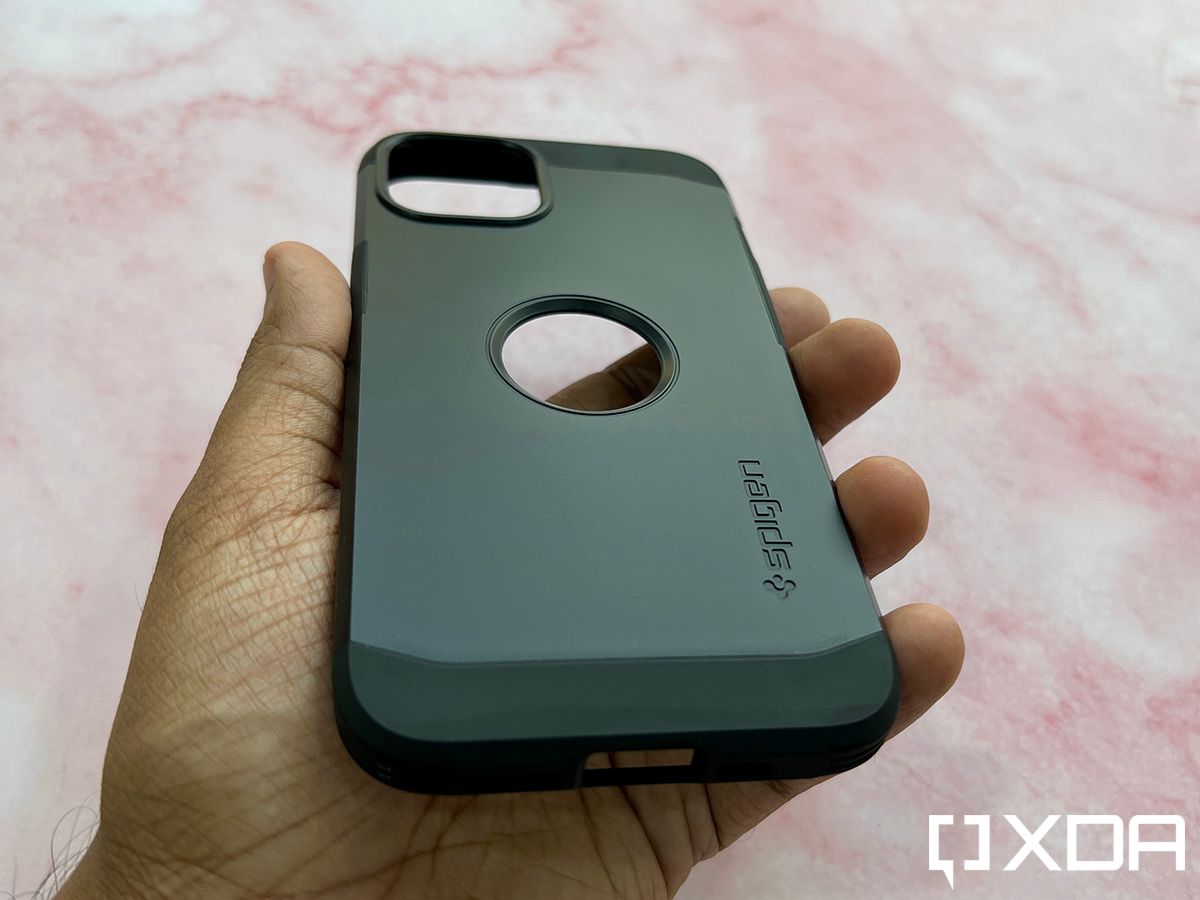
Spigen Tough Armor Mag case

The Tough Armor Mag case that Spigen sent for review was mistakenly for the iPhone 13 and not the iPhone 13 Pro that I have. I’ve used Tough Armor cases in the past, but for obvious reasons, I could not use this particular case as it wouldn’t fit.

Spigen Tough Armor case for the iPhone 13 Spigen Tough Armor case for the iPhone 13

Nonetheless, the Tough Armor Mag case has all the usual hallmarks of a good case. It has the conventional flat edges that Spigen presents on this lineup, a hybrid TPU plus polycarbonate build, alongside MagSafe compatibility. There are pieces of foam in the middle for shock protection, but the total foam coverage is a lot lower on this MagSafe compatible case than it is on the non-MagSafe case. Note that the foam pieces are on the backplate only and not on the side frame, so the overall difference in practical utility between the MagSafe case and the non-MagSafe case may not be all that different from each other. On the regular non-MagSafe case, you also get color options for the backplate. However, you do get a circular cutout in the middle to show off the phone’s rear Apple logo on both variants of the case, which is something I did not expect to see on a case designed for maximum impact protection.

    Spigen Tough Armor Mag case for the iPhone 13 Pro
    The Spigen Tough Armor Mag case is part of one of the most popular lineups from Spigen. You get a TPU-polycarbonate hybrid build as well as pockets of foam on the backplate. The Apple logo also remains visible on this opaque case.

Spigen Glastr EZ Fit Screen Protector for the iPhone 13 Pro

Before Spigen sent me one, I actually did purchase the very same Glastr EZ Fit Screen Protector on day 1 for my iPhone 13 Pro, the same as I did with the iPhone 12 too. I’ve used this screen protector line for the past year, and I have had no complaints about it.

Spigen Glastr EZ Fit Screen Protector_2

For starters, you get two screen protectors in the pack. Each one comes set within its own tray that matches the silhouette of the phone. The tray is half the magic, as it facilitates a near-flawless application. You wipe the phone screen and set the phone down on a flat surface, remove the protective film from the screen protector within the tray, and then place the tray over the phone, where it will click and fit into place. Press down on the middle of the screen protector and you will see it sticking onto the phone screen. Remove the holder sticker from the tray and the screen protector will fully rest on the phone. You can then lift the tray and use the squeegee to remove any air bubbles.

Spigen Glastr EZ Fit Screen Protector_3

The very first time I tried this screen protector, I actually messed up. I live in a rather dusty area, so despite my best efforts, a few specks of dust had managed to sneak in the application process, spoiling an otherwise perfect application. I had the screen protector applied for an hour like that before I decided to lift up the protector and remove the dust with cello-tape (I had already used up the dust removal stickers that were provided). Surprisingly, that worked and the same screen protector settled in perfectly after that. This application lasted for the entire duration of my iPhone 12 ownership, so it made sense for me to pick the same screen protector up for the iPhone 13 Pro as well.

Spigen Glastr EZ Fit Screen Protector

What I like about the Spigen Glastr EZ Fit is that it is case-friendly and is compatible with all of Spigen’s cases. Presuming you got the tray alignment right (how can you not?), all the other cases that I tried in this review have been worn and removed (cycled through 10 days, and then again when writing this up) on an iPhone with the protector applied, without unsettling it. There’s a thin gap between the case and the screen protector, just enough tolerance to allow the two products to harmoniously coexist. The screen protector also has rounded edges, so it doesn’t feel sharp if you use it without a case.

Over a year of use, the screen protector took the brunt of scratches in my pockets but had otherwise survived through a few drops (with a Spigen case on). If you are using just the screen protector without any cases, there’s a probability that a phone drop will get you a crack or some chipping — but that’s the very purpose of the screen protector. It needs to take the major brunt of use without transferring any damage to your phone screen, which is much harder and expensive to replace. To that end, the Spigen Glastr EZ Fit held up well in my experience. I also have no complaints on other aspects such as clarity or smudge resistance — it performs as I’ve experienced other screen protectors perform. This is not the cheapest screen protector around, but I have been very happy with how it performs and would consider it an investment into an expensive phone rather than an expense. Note that I use the regular version of the screen protector which is clear and does not cover the front camera and the Face ID sensors, and Spigen also sells a “sensor protection” version that does cover those sensors as well as a “privacy” variant.

    Spigen Glastr EZ Fit Screen Protector for the iPhone 13 Pro
    The Spigen Glastr EZ Fit Screen Protector is a case-friendly screen protector that is very easy to apply and does the job really well.

Spigen PowerArc ArcField Magnetic Wireless Charger

Spigen PowerArc ArcField Magnetic Wireless Charger_1

Spigen also sent along their ArcField Magnetic Wireless Charger. This is essentially a MagSafe charger equivalent, but cheaper at $25 than Apple’s $39 charger. Neither Apple nor Spigen include a charging brick with their product. The Spigen wireless charger has a USB Type-C end on one side, and the wireless charger puck on the other. It is an extremely light puck that gently snaps onto the MagSafe magnets on compatible iPhones like the iPhone 12 and 13 series. It maxes out at 7.5W output (Qi) for the iPhone 13 Pro, while the Apple charger maxes out at 15W — I wouldn’t call either number as “fast” for wireless charging, and you can blame Apple for the difference in numbers. Note that there are no grip surfaces underneath the charger, so it will slide around your table — that is an intentional design decision as the MagSafe puck chargers are meant to allow movement with the phone. The Spigen charger works through thin cases, but the general rule of thumb is that the more the distance between the charging coil on the phone and the charger, the slower it will charge. You can charge other devices with this too, but you’d still be restricted to 7.5W and you might not get any magnetic latching.

I’ve not been a fan of the Apple MagSafe charger, and the Spigen ArcField Magnetic Wireless Charger does not reinvent the category in any way. If you specifically need a MagSafe charging puck, you can consider getting one. But otherwise, there are better wireless chargers for the iPhone on the market.

    Spigen PowerArc ArcField Magnetic Wireless Charger
    The Spigen PowerArc ArcField Magnetic Wireless Charger is a MagSafe charger alternative. However, it suffers from the same design limitations as the official charger from Apple, and Apple does not allow full 15W charging from Qi chargers.

Spigen OneTap MagSafe Stand

The Spigen OneTap MagSafe Stand is a personal purchase and not part of Spigen’s review kit, and it has been the most surprising Spigen product for me. I didn’t realize how much I would like it, and it has now found a permanent spot on my desk.

As the name implies, the MagSafe Stand is a phone stand that relies on MagSafe to hold your iPhone in place. The phone snaps into place as you bring it close to the stand. You can place the phone in any orientation or angle as this is a MagSafe compatible stand. The head of the stand can be tilted all the way down till the head touches the stand, and almost all the way to the other side (but this causes imbalance). There are no other moving parts. There’s a slit in the stand to help you route a charging wire through. There’s also a magnet area on the back wherein you can stick a cable magnet that comes within the box (but was sadly missing on mine). The stand has rubber feet that felt like adhesive at first, but I later realized were not sticky, but grippy.

Spigen OneTap Magnetic Stand_1

Why I really like the MagSafe Stand is because it does what it says on the box. The iPhone 13 Pro latches firmly onto it, and pulling it out takes deliberate effort, just the right amount you would expect on a stand. I’ve placed this next to my desktop, and combined with the phone’s FaceID, this lets me quickly read through the myriad notifications I receive in a day without needing to pick up my phone.

Spigen OneTap Magnetic Stand_2

You can use the stand with non-MagSafe cases, but the magnetic grip is not very confident in such cases. Pair it with a MagSafe case, and it is strong enough for me to photograph the phone stuck on it 5 feet in the air. I am very happy with this stand, though now that I have it, I wished I had the one with wireless charging. Right now, to charge the phone, I need to route the wire and plug it normally, which is a bit inconvenient — wireless charging would have saved me the hassle entirely. There’s a $7 difference in the pricing between the two variants. I do consider phone stands a non-essential purchase, so you will have to decide if the $30 spend is worth the convenience to you, especially since you can’t place any other non-MagSafe product on this.

    Spigen OneTap MagSafe Stand
    The Spigen OneTap MagSafe Stand is a confident MagSafe stand for compatible iPhones. You can place your phone in any orientation, and the head tilt gives you plenty of angles to play with. It also has a nice sturdy base, but no wireless charging.

Spigen makes quality products, and this is another year where I have walked as a happy customer and a happy reviewer. A lot of cases and accessories you see in this review are personal purchases, and they were day 1 purchases because of the past goodwill that the brand has accumulated. Yes, some of the prices are on the expensive side, especially if you compare them with the sea of alternatives from lesser-known brands around the world. But I do not mind paying the small premium to get something I can and have truly depended on. Based on the product, it could be worth assessing if you would get the same value out of it as I did.

What are your thoughts on the above-mentioned cases from Spigen? Do you also have good (or bad) experiences with Spigen cases? Let us know in the comments below!

The post Checking out Spigen’s iPhone 13 Pro case and accessory lineup appeared first on xda-developers.


from xda-developers https://ift.tt/3GFdidR
via IFTTT

vendredi 10 décembre 2021

Redmi Note 11T 5G Review: Successfully carrying the burden of 5G in 2021

Generally, I start reviews by building some context around the product in question. This time, I’ve decided to start off with the verdict. The Redmi Note 11T is a typical mid-range 5G phone from 2021. It’s got a capable chipset with support for 5G, a large battery, a decent display, and an average set of cameras. This has been the story of just about every 5G phone in this segment so far. The fact is, the 5G tag brands are chasing after comes at a price, and this burden remains quite avoidable in India in 2021.

Given that 5G is still a relatively new technology, chipsets that have an integrated 5G modem aren’t cheap. The worldwide chip shortage has just added to the misery. To accommodate the increase in the price of processors, brands have to cut corners elsewhere. This is why you see an LCD display instead of OLED, inferior cameras, and some other compromises here and there. If you still insist on buying a 5G phone in this price bracket, your best bet is to pick one up that makes the least compromises. The Redmi Note 11T is one of them. Let me tell you why.

Redmi Note 11T Display

About this review: Xiaomi India sent us the Redmi Note 11T 5G and the device was used for a period of one week before writing this review. The brand did not have any input into the contents of this review.

Redmi Note 11T 5G: Specifications

Specification Redmi Note 11T 5G
Build Polycarbonate frame + back
Dimensions & Weight
  • 163.6 x 75.8 x 8.8 mm
  • 195g
Display
  • 6.6-inch IPS LCD
  • 90Hz refresh rate
  • 450 nits peak brightness
  • 1080 x 2400 resolution
  • 20:9 aspect ratio
  • Gorilla Glass 3 protection
SoC
  • MediaTek Dimensity 810
    • 2 x 2.4GHz Cortex-A76
    • 6 x 2.0GHz Cortex-A55
  • 6nm
  • Mali G-57 MC2 GPU
RAM & Storage
  • 6/8GB RAM
  • 64/128GB internal storage
  • Micro SD card slot
Battery & Charging
  • 5,000mAh battery
  • 33W fast-charging
Security Side-mounted fingerprint scanner
Rear Camera(s)
  • Primary: 50MP, f/1.8, PDAF
  • Ultra-wide: 8MP, f/2.2
Front Camera(s) 16MP, f/2.5
Port(s)
  • USB-C
  • IR Blaster
Audio
  • 3.5mm audio jack
  • Stereo speakers
Connectivity
  • Wi-Fi 802.11 a/b/g/n/ac
  • Bluetooth 5.1
  • 5G
  • Dual-SIM
  • GPS, A-GPS, GLONASS, GALILEO, BDS
Software
  • MIUI 12.5
  • Android 11
Other Features
  • IP53 rating
  • Pre-installed screen protector
  • Case in the box

Build and Design

Redmi Note 11T Design

The Redmi Note 11T 5G looks similar to just about any other smartphone in this segment. It’s got a polycarbonate frame and back with a matte texture. While I wouldn’t say the brand has compromised on the way the phone looks and feels, the Redmi Note 10 Pro from earlier this year felt much better in the hand. The phone feels quite hefty and the back doesn’t feel very premium.

It is IP53 rated though, so you should be fine with the occasional spill or splash. The rear camera module follows the same design language as the previous-gen Note devices. From a distance, the camera array appears to have four lenses. But upon close inspection, you’ll realize that the phone only has two cameras and an LED flash. The two extra rings with a red dot and AI branding were unnecessary and are there just to give an illusion of a quad-camera setup.

Redmi Note 11T cameras

Xiaomi has done a fantastic job with the side-mounted fingerprint scanner. It's blazing fast.

Where Xiaomi has done a fantastic job is the side-mounted fingerprint scanner. It’s both blazing fast and reliable. Ten out of ten times, the phone would be unlocked by the time I took it out of my pocket. After taking it out of the pocket, though, I had to use the device with two hands every single time because of the sheer size of the display. Xiaomi includes a case in the box for protection and while it will protect the phone, the TPU material makes it quite slippery.

Fingerprint scanner

As mentioned earlier, 4G phones in this segment are generally built better or just feel better to hold and use. The Redmi Note 10 Pro was slimmer and lighter, and it had a glass back. The Realme 8 was compact and one-hand friendly.


Display

Redmi Note 11T Display

There’s no denying that India is a spec-driven market. The word AMOLED on any phone’s spec sheet automatically attracts more eyeballs than a phone that has an IPS LCD display. Brands also took notice of this and launched phones with AMOLED displays even in the sub-₹20k price bracket this year. The Redmi Note 10 series and the Realme 8 series both had OLED panels with Xiaomi going one step further by giving the Note 10 Pro and Pro Max a refresh rate of 120Hz.

Of course, with the price hike that comes with a 5G chipset, an OLED display is out of the question in this price band. This is why all 5G phones opt for an LCD display under the price of ₹20,000. The Redmi Note 11T also has an LCD display with a 90Hz refresh rate. The panel used is one with a variable refresh rate which means the display can go from 30Hz all the way up to 90Hz.

90Hz refresh rate

The smooth refresh rate surely improves the experience while scrolling through lists and social media feeds.

The smooth refresh rate surely improves the experience while scrolling through lists and social media feeds. However, at times, I did notice a slight stutter when scrolling quickly. This is something I’ve observed even in the past with some phones from Xiaomi having an LCD display with a variable refresh rate, namely the Mi 10i and the Poco X3. It isn’t very frequent though and does not affect the overall experience of using the phone.

Refresh rate is just one of the important aspects of the display though. The most important one is the quality of the panel itself. Xiaomi has provided a good IPS LCD panel with a Full HD+ resolution. There’s a punch hole in the center of the display for the selfie camera. The display gets adequately bright indoors but you may have some difficulty in comprehending what’s on the screen under direct sunlight. Another thing that I personally appreciate is that the bezels around the display, especially on the chin are quite minimal.

Display with hole-punch

This is one of the better display panels that you'll find on a mid-range 5G phone.

If you watch a lot of content on your smartphone, you will be satisfied with the display on the Redmi note 11T. Of course, it doesn’t have the deep blacks and punchy colors of an OLED display but for what it’s worth, movies and shows are surely enjoyable on this large screen. I would say this is one of the better display panels that you’ll find on a mid-range 5G phone. If you want a better display that’s brighter, shows better colors, and has a higher refresh rate in this segment, you’ll have to give up on 5G as of now.

Performance and Software

Performance

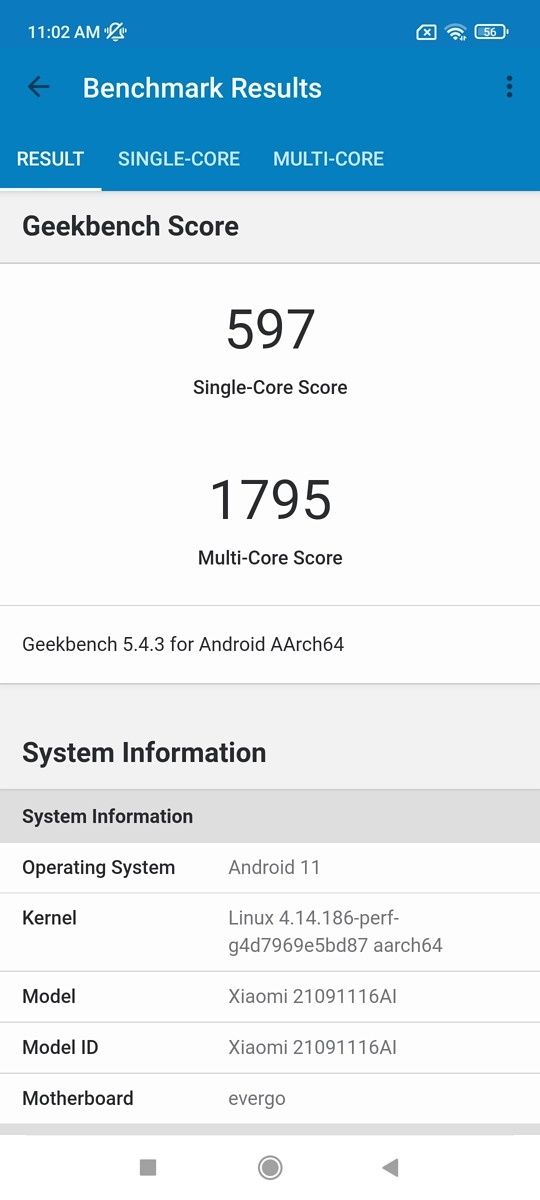
Let’s first get the specs out of the way. The Redmi Note 11T comes equipped with the 5G-enabled MediaTek Dimensity 810 SoC. This chipset is based on the 6nm manufacturing node which is impressive given the price point of the phone. None of this matters in real-life practical performance though. What’s important is how the chipset performs and what kind of tasks it can do. Since this is a relatively new chipset, it makes sense to describe the capabilities of this chip relative to a chip that’s popular and most people are familiar with. Going by that logic, the Dimensity 810 feels similar to the Snapdragon 750G both in terms of actual performance as well as benchmark scores.

BGMI Settings

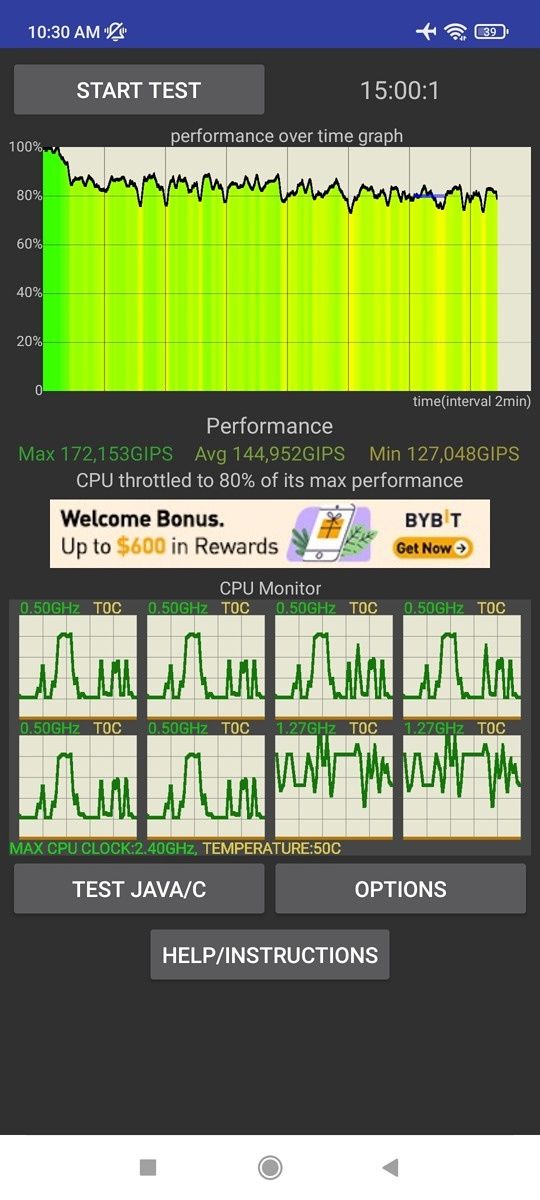
That’s actually great news for folks who seek raw performance. The Dimensity 810 is actually one of the most powerful chipsets in this price range and it’s pretty evident when you use it. Apps open quickly, multitasking is smooth as ever, and even gaming on this device was a surprisingly good experience. For those interested, you can run BGMI on the Redmi Note 11T at Smooth + Ultra settings and I managed to get a constant frame rate of 40fps for the most part. There are slight lags here and there but that’s common to all phones in this range. I also ran a CPU throttle test where the processor throttled to 80% of its max performance over 15 mins of max use and the temperature didn’t exceed 50°C. Good stuff.

Redmi Note 11T Geekbench Scores Redmi Note 11T CPU throttle rest

The Redmi Note 11T scores high in terms of performance.

There’s no real way for me to test the 5G capabilities of the device since India doesn’t have 5G networks yet (another reason to not consider 5G while buying a mid-range phone). The device has support for seven 5G bands though (n1, n3, n5, n8, n28, n40, n78) which seems promising. The Redmi Note 11T scores high in terms of performance. Everything just feels snappy especially when combined with that 90Hz refresh rate. This is undoubtedly the phone’s strongest aspect which is what you’re paying the extra premium for.

MIUI 12.5

Needless to say, the Redmi Note 11T 5G runs Xiaomi’s custom interface — MIUI. You get MIUI 12.5 out of the box based on Android 11. For those of you who have used MIUI in the past, the experience is just the same on this phone. There are a bunch of useful features on MIUI like app lock, a second space, gaming mode, gestures, etc. It also comes with its own set of quirks though.

  • For starters, there’s some pre-installed bloatware that can thankfully be uninstalled.
  • GetApps, Xiaomi’s own app store sends plenty of unnecessary notifications.
  • The default keyboard is Emoji Keyboard which I wouldn’t trust. Gboard is disabled by default which I urge you to enable and set to default.
  • While setting up the phone, Xiaomi ticks the checkbox next to the Facemoji terms and conditions by default. This is unnecessary and I would urge you to deselect it if you don’t use the service.
  • Xiaomi also pushes you to use Glance while setting up the phone, a lockscreen service that is known to display ads at times.
  • Each time you install an app from the Play Store, there’s a security check window that pops up by default. This can be disabled and is unnecessary since Google Play Protect already scans all apps on the Play Store.

Bloatware

Credit where due, Xiaomi has done away with ads in the UI. I also didn’t encounter any sort of vulgar notifications that were a part of the MIUI earlier before the MIUI browser app was banned in the country. I personally like MIUI for the way it looks and all the useful features. If you’re cautious while setting up the device and know what to uninstall/disable, you’ll have a good experience without needing to jump through hoops.


Cameras

Redmi Note 11T Cameras

Every time a brand launched a phone with quad cameras where two of them were 2MP sensors to fill the spec sheet, there was one common request from us media folks — just get rid of the two cameras that don’t really serve a purpose and give us a pair of two good cameras. While Xiaomi heard the first half of the request, I’m not entirely sure they addressed the second half. The primary shooter on the Redmi Note 11T is a 50MP sensor that Xiaomi claims to have sourced from multiple vendors. Despite the high megapixel count, details in the images shot in daylight seem lacking. You can observe a bit of a watercolor effect when you zoom into certain parts of the images clicked by this phone.

While colors of objects like flowers and leaves look quite natural, the software seems to have processed the color of the sky in an unnatural way. It was a cloudy morning in Bengaluru when I clicked these shots but the sky was certainly not as gray as the images show. The same can be said about the 8MP ultra-wide camera too. Kudos to Xiaomi, though, for at least including an ultra-wide shooter since it’s much more useful than a macro or a depth sensor. It’s not very detailed though and shots appear rather dull. However, with good lighting and a photo editor, you should be able to get some usable shots.

Redmi Note 11T Camera Samples

I've certainly used phones with a much better camera setup in this price range.

When the light dips, the performance of the camera remains more or less similar. There’s more loss of detail though especially at the corners. Night Mode does come in handy but a few times, the phone struggled to lock focus on a nearby object while using Night Mode. Shadows all tend to get crushed when there’s not a lot of light. Overall, the rear cameras are usable. I’ve certainly used phones with a much better camera setup in this price range which brings me to the fact that this is another area where you have to settle for inferior hardware in favor of 5G.
Out of focus shot

Out of focus shot on the Redmi Note 11T

The selfie camera seems pretty good though. it managed to do a good job with my skin tone as well as the exposure both in the background and on my face. Even with direct sunlight coming from behind, the frame was well-exposed and nothing was entirely blown out. Edge detection in Portrait Mode also seems on point. If you take a lot of selfies or make short-form content with the front-facing camera, you’ll be pretty much satisfied with this phone.

In terms of video, the rear camera can shoot in up to 1080 60fps while the selfie camera maxes out at 1080p 30fps.


Battery Life and Charging

Battery and Charging

With moderate usage, you should be looking at about 7-8 hours of screen-on time with the Redmi Note 11T.

5G networks are known to consume more power than 4G which is why brands generally put in large batteries on 5G devices. With 5G networks not being available in the country yet, the extra battery certainly comes in handy as the endurance just gets better with 4G. The Redmi Note 11T’s 5,000mAh battery had no issues getting through a day’s use with social media, streaming videos, browsing, texting, and about an hour of video calls. If you play heavy games, the battery will naturally deplete faster. With moderate usage, you should be looking at about 7-8 hours of screen-on time with the Redmi Note 11T.

Redmi branding

Even when you run out of charge, the 33W fast charger in the box will ensure that you don’t have to stay without using your phone for too long. Another area where Xiaomi hasn’t compromised like some other brands do with 5G phones in this segment. A full charge took me about an hour and twenty minutes which seems good for a 5,000mAh battery.


Miscellaneous Features

MIUI quick toggles

This is by far the best haptics that I've experienced on a phone in this price range.

When I said at the beginning that the Redmi note 11T is one of the mid-range 5G devices that made the least compromises, four major factors played a big role in making that statement. Two of those factors are good performance and fast charging. The other two belong to this segment. Firstly, the Redmi Note 11T has stereo speakers which improve your media consumption experience considerably. The main differentiating factor for me, though, was the haptics. This is by far the best haptics that I’ve experienced on a phone in this price range. It’s the little things like these that matter.

Stereo Speakers

Apart from that, the phone has a standard hybrid SIM tray, and a headphone jack if you still prefer wired audio. In typical Xiaomi fashion, there’s an IR blaster up top that lets you control appliances like your TV or AC. The phone is also Widevine L1 certified, so HD playback is possible on Netflix and Prime Video.


Verdict: Should you buy the Redmi Note 11T?

Redmi Note 11T back

Honestly, I was a little surprised that Redmi decided to debut the Note 11 series in India with the Redmi Note 11T. After all, a new Redmi Note launch is one of the biggest launches in India, so it would have made better sense to bring the successors of the Redmi Note 10 Pro and Note 10 Pro Max first since one expects them to be excellent devices. My point is that the Redmi Note 11T seems a little underwhelming to start a new series with since it’s just like any other typical 5G phone in this segment.

However, it’s got a few things going for it, making it one of the better options out there if 5G is an absolute necessity for you. The performance is excellent, it charges quickly, it has stereo speakers, and the haptic motor is the best in the segment. Of course, opting for a 4G phone will get you a much better display, improved cameras, and better design. It’s up to you to decide what’s more important to you.

Display top half

Getting a 4G phone in late 2021 or even the beginning of 2022 still makes more sense.

I would say getting a 4G phone at the fag end of 2021 or even the beginning of 2022 still makes more sense. 5G isn’t even available in India yet and there’s no confirmed time frame either. Heck, the spectrum hasn’t even been auctioned to telcos yet. Even when it finally arrives, 5G is going to be a lot more expensive than 4G and the availability is going to be limited to certain areas only. A country-wide adoption of 5G networks will require at least another 2 years, and more realistically 3-4 years which is still far, far away. You’ll most probably get a new phone by then which will have 5G, that too at a lesser price since the tech would have been standardized by then.
    Redmi Note 11T 5G
    The Redmi Note 11T is a 5G smartphone from Xiaomi in the mid-range segment. It's the first phone in India that belongs to the new Redmi note 11 series.

      Features:

      Pros:

      Cons:

If you’re in the market for a new mid-range smartphone, I would say wait it out till Xiaomi launches the standard Redmi Note 11 and its other variants. In case you want a phone right away, the Redmi Note 10 Pro is still a fantastic device and will give you a better package overall compared to the Redmi Note 11T. If you specifically want a 5G phone and are fine with all the shortcomings mentioned in this review, the Redmi Note 11T is one of the better options out there for you to consider. Even if it’s only for the haptics.

The post Redmi Note 11T 5G Review: Successfully carrying the burden of 5G in 2021 appeared first on xda-developers.


from xda-developers https://ift.tt/3pOCpo0
via IFTTT